
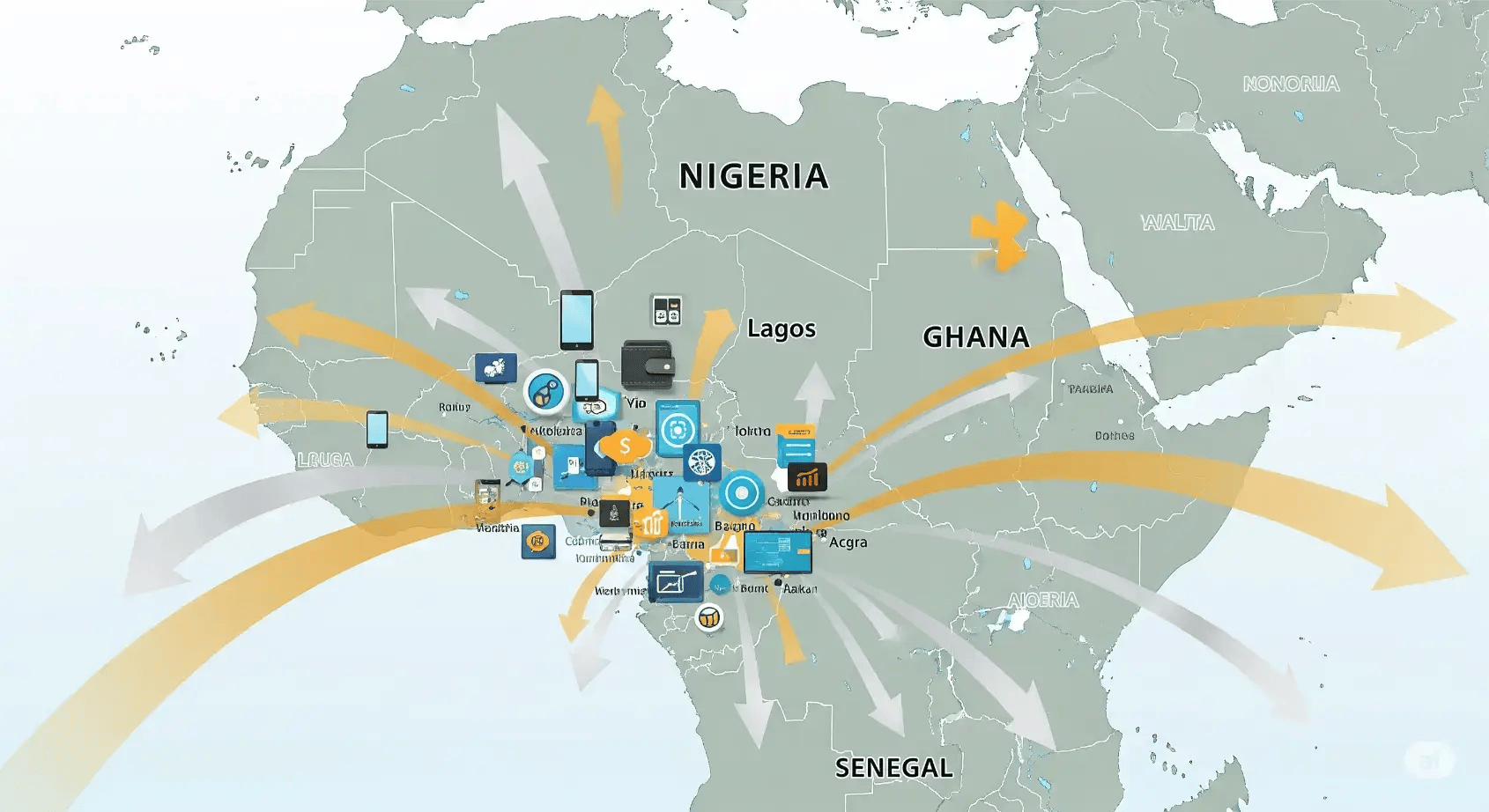
In 2024, Moniepoient and Moove constituted more than 50% of Nigeria’s fintech funding. Moniepoint announced a $110 million Series C round, and Moove raised $110 million in a Series B round, led by Uber.
Fintech companies typically reveal industry updates through funding announcements, which are official statements made by fintech companies when they secure a new investment in their business.
It typically includes the amount of capital raised, the type of funding round, the Investors involved, the intended use of funds, and updates on the company’s valuation or growth metrics.
What Is a Fintech Funding Announcement and Why Does It Matter?
Fintech Funding announcements are official and public disclosures made by financial technology (fintech) startup companies when they secure new investment through seed, Series A/B/C rounds, venture capital backing, or private equity, and about strategic milestones like the company’s valuation or growth metrics.
Over the past few years, the growth of tech publications such as TechPoint Africa, TechCabal, Disrupt Africa, Nairametrics, Afridigest, and Condia has contributed to the dissemination of news and developments within the fintech sector, particularly in terms of fintech investment news and milestone achievements.
These Fintech Funding Announcements are also needed and necessary for the following reasons:
- Investors Alert: Fintech Funding Announcement serves as a signal of a market moment, deal discovery, risk benchmarking, and portfolio evaluation. It helps investors to know where capital is flowing and where they can invest or acquire.
- Founders’ Credibility: Public announcement of funding boost founders’ and the company’s authority, investors’ confidence, and customer trust. It also attracts strategic interest from future funding partners and provides competitive leverage in terms of hiring and expansion.
- Fintech Ecosystem: The funding announcements of fintech companies bring increased visibility to the industry, shift investors’ sentiment, and draw government attention by shaping policy and regulations that can better support the ecosystem for the national economy.
The Journey of a Fintech Startup: From Seed to Series C
The fintech industry is one of the most heavily invested in digital driving sectors, with a dynamic mode of operation that focuses on solving payment flows and also Digital banking innovation. This dynamism requires substantial capital to start well and also scale legally.
Most Financial technology investments often occur in a series of funding stages, from seed to Series C.
- Seed Stage: This is the Fintech capital raise that turns ideas into a Minimum Viable Product (MVP) stage. At the seed stage, use fundraising to validate the problem-solution fit, iterate on product features, and also acquire initial users. Angel investors, early-stage VCs, accelerators like Y Combinator, and friends & family often provide the capital.
- Series A: This funding stage enables fintechs to achieve market traction, establish a product-market fit, and establish their brand. It also funds specific growth areas, such as hiring core teams and expanding operations into a ready market.
- Series B: A Series B raise is to scale the operations of a fintech across regions or verticals. Funding here might involve automating operations and market leadership efforts, such as partnerships and compliance.
- At the Series C stage, funding is typically used to expand market dominance, often for national or internal expansion, mergers and acquisitions, and further product development. At this stage, there’s a focus on investors’ priority on profitability and opportunity.
Fintech Funding Trends Shaping 2025 and Beyond
Fintech funding trends continue to rest on various pillars, including economic forces, customer behaviours, innovation, and investment, which have shaped, are shaping, and will continue to shape the industry.
Below are key funding trends that will define the fintech industry in 2025 and the years ahead:
Sustainable Growth: With incidents of fund mismanagement and ecosystem debt in the industry, investors are now shifting towards funding high-growth models and demanding sustainable revenue with lower customer acquisition costs and firmer retention metrics.
AI-Powered Fintech Startups: With the emergence of AI startups in the global market, investors direct more funding toward AI-powered fintech startups, which utilise AI for fraud detection, customer service, and mini-marketing functions.
Localised Fintech Hype: National and Global investors are betting on fintech companies focused on solving hyperlocal finance issues, such as lending and insurance. It is due to the success of fintech, which began with such a strategy and evolved into unicorns.
Rise of Vertical Fintech: The industry has shown that VCs are now favouring vertical-focused fintechs in agriculture, human resources, and logistics over those offering general services.
Presence of Corporate Investors: Traditional banks, telecoms, and insurance giants are co-investing or acquiring fintechs to modernise offerings.
Alternative Funding Model: Although this approach has not yet gone mainstream, a wave of alternative funding models, including fintech crowdfunding and revenue-based financing, has emerged.
Regional Spotlight: Where Is Fintech Funding Flowing?
As fintech continues to disrupt traditional finance and introduce innovative approaches to everyday banking, investors’ attention is shifting increasingly toward original and practical ideas that can scale globally.
Let’s spotlight the top global regions attracting fintech funding in 2025 and explore why investors are betting big in those markets.
- Nigeria and West Africa: The youthful population of Africa, combined with smartphone and internet usage, as well as regulatory clarity, is attracting funding. Additionally, the success of giants like Moniepoint, Flutterwave, and Fairmoney continues to attract significant funding into the region.
- India: The region is often referred to as the home of scalable infrastructure, with funding flowing towards the growing UPI system and financial infrastructure. Notable deals around the area include Cred, Razorpay and Groww.
- Bravil & Latin America: The region is reportedly underserved, with a high demand for financial inclusion, mobile-first consumers, and supportive regulations in Brazil, Mexico, and Colombia. Notable deals here include Nubank, Ebanx, and Neon.
- Southeast Asia: With a focus on digital wallets, buy-now-pay-later (BNPL), Islamic Finance, and Micro-Investing, and a growing middle class, the region’s fast adoption has attracted a significant influx of fintech funding.
Who’s Investing in Fintech? Meet the VCs and Funds Fueling the Ecosystem
We have seen Fintech fundraising from venture capitalists (VCs), private equity (PE) firms, development finance institutions (DFIs), and strategic investors who have backed and continue to bet on the future of digital finance.
Below are the top investors backing the fintech ecosystem:
Local Power House
- Future Africa: They are investors who serve entrepreneurs with capital, offer founders support and are also involved in policy engagement. They have backed fintechs like Flutterwave and Paystack.
- Microtraction works with teams at the pre-seed and seed stages, adopting a tech-first mindset. They have invested in companies such as Cowrywise, 54gene, and Bitsika.
- Venture Platform: They invest in companies that provide solutions that align wth socio-economic impact, focusing on Fintech, Agtech and Edtech.
Pan-African & International Giants
- TLcom Capital: An international firm with headquarters in Nigeria and London, with a focus on Series A and beyond support. Some of their key investment include Okra and Terragonn.
- Partech Africa: Based in Paris and Dakar, with TradeDepot and Wave as part of their investment.
- Helios Investment & Partners is known for its larger ticket sizes and long-term growth. They have invested in companies such as Interswitch and Axxela.
Global Venture Capital Backers
- Y Combinator provides startups with global visibility, a robust network, and access to follow-on investors. They have backed startups such as Paystack, Flutterwave, Prospa, and Chowdeck, among others.
- Tiger Global is a U.S.-based investment firm that has become one of the most influential players in the global venture capital industry. They have invested in Fintech unicorns like Flutterwave and FairMoney.
The Impact of Fintech Funding Announcements on Market Sentiment
Fintech funding announcements do more than just signal cash flow; they influence perception, drive market narratives, especially in startup funding announcements, and shape the behaviours of investors, customers, and competitors.
Here is how:
- Investor Confidence: A funding announcement triggers a positive feedback loop within the ecosystem, where other investors become more attentive and follow suit.
- Media Coverage: Announcements like fintech solutions funding create media buzz, earn free media, and industry chatter, which adds to the visibility and credibility of the fintech organisation. It also helps to impact the customer’s and stakeholders’ perception positively.
- B2B Trust and Partner Attraction: Enterprise partners and financial organisations are more likely to partner with well-funded fintechs. The announcement put them on the radar of strategic alliances.
- Talent Recruitment and Team Morale: Funding the internal team of a fintech boosts morale and creates room for team expansion by hiring more staff and promoting brand equity among employees.
- Customer Sentiment: An announcement of funding can help customers view the fintech as credible and committed to staying in business, which might translate to higher app downloads, increased user trust, and trial adoption.
What Makes a Fintech Startup Fundable in 2025?
Fintech funding deals occur for various reasons, such as demonstrating strong fundamentals, straightforward scalability, and market relevance. And startup founders must ensure that they go beyond flashy decks and complicated ideas when seeking funding.
Here’s what makes a fintech startup fundable in 2025:
- A Clear, Pressing Problem: This is what investors want to see; they want to see real problems and customers’ pain points, especially in the current financial infrastructure.
- Massive Addressable Market: Ensure your solution addresses a growing market or has the potential for regional scalability across Africa and the diaspora.
- Early Traction & Use Engagement: Early evidence of product-market fit, including user numbers, revenues, and verifiable data on usage and retention, can pique VCs’ interest in funding.
- Solid Monetisation Model: Investors want to see a clear plan to sustain profitability, transparent pricing and a margin structure that will put their mind at rest when investing.
- Compelling Storytelling & Positioning: Some investors are also interested in your vision, how persuasive it sounds, and how you differentiate yourself from the crowd.
Other factors that can contribute to what makes a fintech fundable include: a strong advisory network, Impact and ESG Considerations, an Innovative Tech Stack, a Strong team, compliance and regulatory readiness, and many more.
How to Track and Use Fintech Funding News for Business Intelligence
Fintech funding announcements aren’t just headlines and official declarations; they are strategic market signals for entrepreneurs, VCs, analysts and even competitors. They provide insights and aid in decision-making, positioning, and opportunity mapping.
The best places to check when tracking fintech funding news include, but are not limited to, the following: TechCabal, TechPoint Africa, Crunchbase, Disrupt Africa, WeeTracker, Nairametrics, LinkedIn, X(formerly Twitter), and personal blogs like J&F by Jasiel Martin-Odoom.
Here’s how to track and leverage fintech funding news as a powerful tool for business intelligence in 2025:
How to Track:
To track fintech funding news effectively, you need to know where to look—as mentioned earlier—and how to track it using automated tools like Google Alerts, Crunchbase Pro, LinkedIn keyword monitoring, and X Lists.
You must also be aware of what to look out for, which includes the funding amount, stage, lead investors, geographical focus, and the intended use of funds, among other key factors.
How to Use It
This tool can be utilised internally for marketing purposes, such as competitor benchmarking, targeting sales to newly funded startups as clients, identifying trending product features, and providing funding to founders. Additionally, it is for pitch improvement and investor match research.
Aside from these, fintech funding news also helps target investors and analyse their current portfolio moves.
Conclusion
The fintech funding announcement is both strategic and influential for the fintech organisation and its ecosystem. For investors, it helps to spot early winners and high-growth sectors, as well as identify follow-on or exit opportunities.
For founders, it helps attract top talent, future investors, boost user confidence, and strengthen negotiating power in the market.
And for the ecosystem, it boosts investors’ confidence in the region and also creates room for potential shifts in regulation.If you are a founder in need of a press release service for your fintech funding announcement, consider a package from Pressdia.