Headliner Publications Promo
This slot is closing.
- Ends in 24 hours. No extensions.
Offer expires in:
Days
Hours
Minutes
Seconds
Once it’s gone, it’s gone.
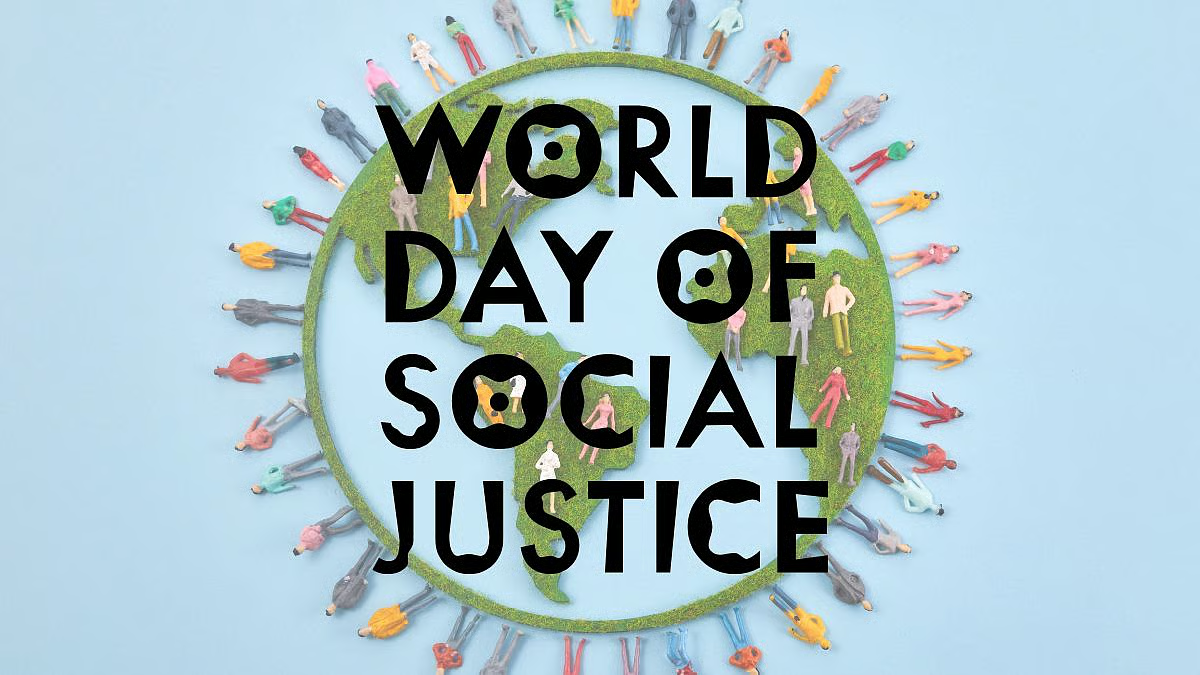
Social justice communication is one of the fastest ways to build trust or destroy it. Organizations get this wrong in two common ways. Some over perform with vague statements and exaggerated claims, which audiences read as performative. Others avoid communication entirely, which creates suspicion and erodes confidence. World Day of Social Justice is a moment to communicate responsibly, not loudly, and to show measurable commitment without exploiting the people your work is meant to serve.
This article solves the “performative messaging” problem by outlining how to build ethical storytelling, how to structure a social justice release for credibility, how to distribute via Pressdia, and how to amplify through aligned platforms like Talented Women Network, Empire Magazine Africa, and Crest Africa when relevant, without turning serious issues into marketing props.
Ethical storytelling starts with truth and specificity. Do not claim impact you cannot prove. Do not use emotional language to compensate for weak action. Begin with what you actually did. If you ran an initiative, state the scope. Who was served. How many people benefited. What changed. What remains unfinished.
Transparency is a credibility multiplier. It makes your work safer for editors to publish because it reduces the risk of backlash. It also makes your brand more trustworthy because audiences respect organisations that speak with honesty rather than perfection.
Your press release should reflect that discipline. The headline should state the real action, not vague values. Your opening paragraph should summarise the initiative and its relevance to social justice clearly. The body should provide context: the problem being addressed, why it matters within your market, and what your approach contributes.
Include proof: numbers, partnerships, program design, timelines, and outcome indicators. Include one quote that reflects responsibility and accountability rather than celebration. A good quote communicates why the organisation cares, what it learned, and what it is committed to improving next. Then provide clear contact details and links for anyone who wants to verify, collaborate, or request additional details.
Distribution via Pressdia helps because ethical work deserves credible visibility, but it must be communicated properly. Pressdia provides a structured pathway to reach relevant outlets without relying on random outreach. The key is alignment. Choose distribution that matches your story’s audience.
If the initiative is Nigeria focused, prioritise Nigerian platforms. If it has pan African relevance, expand your reach accordingly. Prepare supporting assets that keep the story grounded, such as a short outcome summary, a simple infographic, or a link to a detailed impact report. These assets help editors publish responsibly and help audiences understand without distortion.
Amplification must be handled carefully. Do not chase viral reactions. Focus on clarity, education, and invitation for partnership. If your story intersects with women’s empowerment, inclusion, women led initiatives, or professional mobility for women, Talented Women Network can amplify the message in a community aligned way that encourages meaningful engagement rather than surface level applause.
If your initiative includes leadership commentary and credible business responsibility narratives, Empire Magazine Africa can help frame it as a serious leadership case study rather than a press stunt. If the story fits into broader African impact narratives and recognition of sustained contribution, Crest Africa can strengthen authority signals and position the work inside a wider context of continental transformation.
Measurement should be aligned with integrity. Track coverage, yes, but also track partner interest, volunteer engagement, stakeholder trust, and program outcomes. Social justice communication should lead to stronger accountability, not only attention. World Day of Social Justice is most useful when it becomes the start of a disciplined communication habit: act, measure, communicate clearly, distribute via Pressdia, amplify responsibly, and iterate. When you do that consistently, your reputation becomes stronger because your storytelling matches your actions.