Headliner Publications Promo
This slot is closing soon.
- Ends in 24 hours. No extensions.
Offer expires in:
Days
Hours
Minutes
Seconds
Once it’s gone, it’s gone.
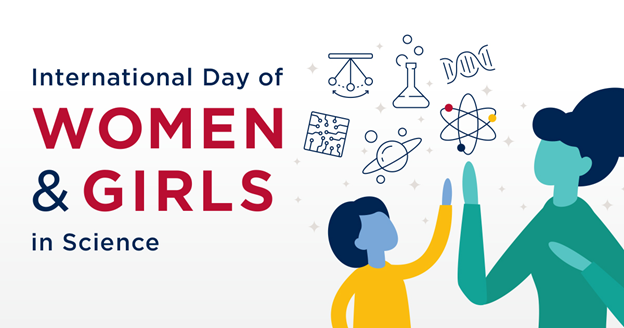
Many of Africa’s most promising scientific and innovation stories do not fail because the work is weak. They fail because the storytelling is not shaped for visibility, the distribution is not structured for editorial pickup, and the people doing the work often assume that results will speak for themselves.
The International Day of Women and Girls in Science is a rare strategic moment to correct that pattern, not with shallow celebration but with credible visibility that can translate into partnerships, funding conversations, speaking invitations, and stronger trust with the public.
If you are building in STEM, leading a research effort, launching a healthtech solution, developing climate innovations, or running a science driven organization, your challenge is not only what you are doing. It is whether the market understands it, whether media can translate it easily, and whether your story reaches the outlets and communities that shape credibility.
This article solves that gap by showing how to structure a science related story for pickup, how to target the right outlets, how to distribute through Pressdia for scale, and how to amplify responsibly through ecosystem platforms like Talented Women Network, Empire Magazine Africa, and Crest Africa where relevant, so your work is not hidden behind the noise of trend cycles.
Proper visibility in science is not about hype. It is about making the value clear, verifiable, and easy to report. Editors and producers receive large volumes of pitches every week, and anything that reads like an academic abstract, a grant application, or a product brochure will likely be ignored because it creates work for the journalist. Your job is to reduce friction. That begins with the angle.
Science stories perform better when they are framed around outcomes and context instead of technical detail first. What is the problem being solved. Who is affected. What changes because this work exists. Why does the timing matter now. When you lead with impact, you give journalists a story they can explain to a general audience. When you follow with proof, you make it safe for them to publish. Proof can be early adoption numbers, pilot results, partnerships, recognitions, measurable outcomes, or even a credible description of the methodology and why it is reliable. The point is not to oversell. The point is to be specific and grounded.
From there, structure your press release like a media ready story, not a company announcement. Your headline should be outcome led and human readable, not coded with jargon. Your opening paragraph should answer the key questions immediately: what happened, who is involved, what the work achieves, and why it matters within your market. In the next paragraphs, provide the credibility layer: the background that explains what makes the innovation distinct, the data points that support the claim, and the context that ties it to real world needs.
Include at least one quote that adds insight, not praise. A strong quote sounds like leadership clarity. It explains motivation, ethics, and long term intent. It should sound like a person who understands responsibility, not a marketer chasing applause. Then close with a clear boilerplate, a link to your official pages, and accessible contact details so editors can verify and follow up quickly.
Targeting is where many science and innovation stories collapse. If you send a STEM story to random entertainment lists, the release will underperform and you will mistakenly assume the story is not newsworthy. Instead, build a deliberate distribution map based on the story type.
For tech driven innovations, tech and business outlets are often the best first layer because they already cover innovation narratives. For health, policy, climate, and education related work, mainstream outlets and sector focused publications can be more receptive, especially if you supply practical relevance and a clear public interest angle. You do not need to guess. Look at who has covered similar stories in your market. Study their headlines and their framing. Identify the beats and the editorial tone. Then mirror the structure, not by copying but by aligning your story with how editors publish.
Distribution through Pressdia matters because even a well written story can die if it is not delivered efficiently and consistently. Manual outreach is slow, exhausting, and prone to mistakes. Pressdia helps solve the distribution bottleneck by creating a streamlined path to curated media reach, allowing you to submit in a standardised format that reduces delivery friction.
The smarter way to use Pressdia is not to treat it as a one off tool. Use it as part of a rhythm. International Day of Women and Girls in Science can be one anchor moment, but credibility is built through repeated, consistent signals across the year. A February story can be followed by a progress update, a partnership milestone, an outcome report, and a thought leadership commentary. That sequence builds familiarity with editors and reinforces trust signals with audiences.
Amplification is the final layer that turns coverage into momentum. Once your story is distributed, support it with ecosystem aligned visibility. If the story is centered on women in STEM pathways, women led research, or leadership narratives that empower women, collaborating with Talented Women Network can extend the reach into communities that value that angle and are more likely to share it organically. If the story carries leadership depth, business relevance, or founder perspective, Empire Magazine Africa can provide a complementary platform for feature style storytelling that strengthens authority beyond the news cycle.
If your work ties into pan African progress, innovation leadership, and recognition culture that highlights under celebrated impact, Crest Africa can help position your story within a broader continental narrative that signals credibility to partners and stakeholders. This is not about name dropping. It is about using aligned platforms to reinforce seriousness and ensure your story travels further than your own channels.
Measurement should also be treated professionally. Track pickups, backlinks, mentions, and referral traffic, but also track the more valuable outcomes: partnership calls, investor interest, recruitment quality, speaking invitations, and community engagement. Science visibility is powerful because it compounds.
Each credible feature increases the chance the next feature happens. Each feature becomes proof for stakeholders who were previously uncertain. The International Day of Women and Girls in Science is not simply a celebration. It is a strategic opportunity to package real work into a credible narrative, distribute it through Pressdia, and amplify it with ecosystems likeTalented Women Network,Empire Magazine Africa, and Crest Africa so the people building Africa’s future are not invisible.